
PhD in industry: The best of both worlds?
In brief
A PhD in industry can be an alternative to an academic PhD. You will conduct applied research closer to commercial application, learn how the private sector works and build valuable contacts with potential future employers.
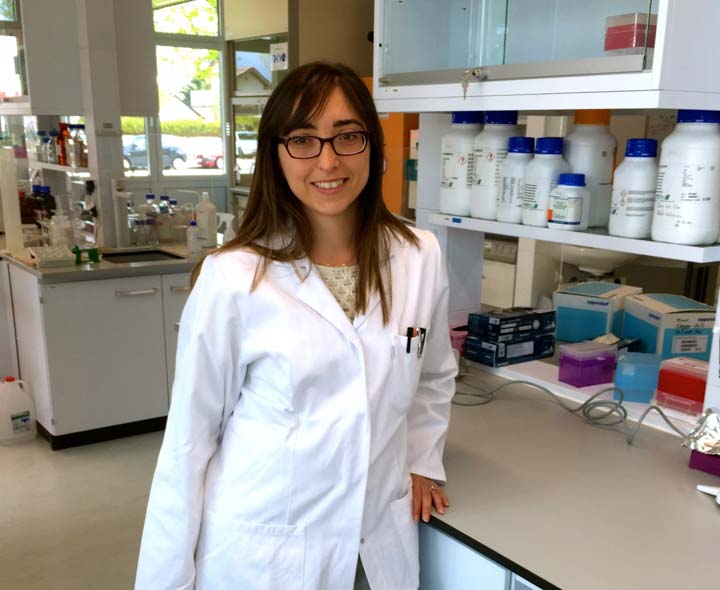
When we spoke to Valentina Cassinelli, she was about to finish an industrial PhD in Germany. She worked on DNA nanostructures at baseclick, a small biotech company in the Munich area. She shared why she chose a PhD in industry and what the experience had been like.
Why an industrial PhD in Germany?
Actually, it wasn’t a deliberate decision to pursue a PhD in industry. After obtaining my Master’s degree in industrial biotechnology, I worked as a researcher at a university in Italy for 1.5 years. My temporary contract ended, and as everyone knows, the labour market in Italy is very tough at the moment; hence, I had few job prospects there. Instead of sitting at home dreaming of a career I didn’t have, I decided to try my luck in one of Europe’s largest biotech parks, namely Munich. I moved to Germany and started sending unsolicited applications for researcher roles to several biotech companies. I was then invited to a job interview at the small biotech company baseclick, which had just received positive feedback from the Marie Curie research fellowship it had applied for. During the interview, they told me they were looking for a PhD student and asked if I would be up for it.
An industry PhD is ideal if you think about transferring from academia to industry. You get the industry experience employers are looking for and at the same time you can still go back to academia if you decide for an academic career.
Was it easy for you, as a foreigner, to find a position in Munich?
I wouldn’t say it was super easy. I quickly realised after arriving that it would be hard to find a position outside academia without speaking the local language. I think I was very lucky, as I had just happened to send an unsolicited application to baseclick and coincidentally had the background they were looking for. In total, it took me only three months between arriving in Germany and receiving the offer. There were another few months between the offer and the actual start of the PhD, which I used to study German.
Editorial remark: When searching for industrial PhD positions, proactive applications can be particularly useful. Our workshop Job application and interview strategies for scientists also covers how to approach employers and communicate your scientific profile.
Being invited based on an unsolicited application… Does that mean you had no competition for the same position?
No, I did have competition. They told me afterwards that they had many more applications once they advertised the PhD position. But lucky me, I coincidentally had the background they were looking for.
My primary aim was to transition from academia to industry.
You signed up for a PhD position but were actually looking for a “normal job”. Why did you choose the PhD?
My main aim was to transition from academia to industry. I therefore did not seriously consider doing a PhD. But once I was offered a role at a company I really liked, I became very excited about it.
You are at the end of your PhD. Are you still excited about it?
Definitely! I think it is a very good way to do your PhD. I learned a lot about industry, including product preparation, shipping, and customer contact. At the same time, I have stayed very much attached to academia, doing research, publishing, attending conferences, and participating in research group meetings. I really had the best of both worlds!
Publishing, conferences and participation in research group meetings… how do they all fit together?
My PhD is part of the EscoDNA (European School of DNA Nanotechnology) network. This is a network of researchers from industry and academia, funded by the European Commission under the Seventh Framework Programme (FP7) as part of the Marie Curie Initial Training Network. Within this network, there are certain requirements. For example, I need to attend one international conference a year. We also agreed that I could publish my research, and I have. I have three publications already and am currently writing the fourth. Furthermore, I am enrolled at the university, so I can participate in activities around their PhD programme as well.
You need to have a supervisor within academia. Did you have to search for one yourself, or was it arranged beforehand?
I had to “search” for my academic supervisor. Now that might sound like a challenge, but as the company baseclick was founded by Prof. Dr. Thomas Carell, a well-known scientist at LMU, and my day-to-day industrial supervisor, Dr. Antonio Manetto, did his PhD with him, it was obvious to ask him to be my supervisor. And he accepted me.
What role does your academic supervisor play in your PhD programme?
I attend the weekly group meetings of Thomas Carell’s research group. I know the PhD students there, and they know me. I present my work once a year and receive feedback and input on my research.
Can you speak freely about your work at the academic group meetings?
Generally, yes. If I were really working on a new product that baseclick wants to bring to market, this might be different, but I mostly work on existing products and use methods that are IP-protected by baseclick.
I have less academic freedom, but as long as the budget allows, I can still follow my scientific interests.
What distinguishes an industry PhD from an academic PhD?
The research itself is more applied, which I really liked. I have less academic freedom, but as long as the budget allows, I can still follow my scientific interests.
The work environment is very different from academia. I was the first PhD student at baseclick, and for a long time I was the only one. The other people are employees and may not all share the same research background. Of course, I could have daily scientific discussions with my industrial supervisors, Dr. Antonio Manetto and Dr. Thomas Frischmuth, but it is different from academia, where your whole environment is in the same boat. At the beginning, I struggled with that, but as I got to know the PhD students in Prof. Thomas Carell’s group and some bachelor’s and master’s students arrived at baseclick, I dealt with it better. Today we even have a second PhD student at baseclick, so it is not an issue anymore.
For safety reasons, no one is allowed to work alone in the lab at baseclick. This means that, unlike academic PhD students, I had much less flexibility in my lab hours. Now that there is a second PhD student, these time restrictions are less of a challenge, as we can work late together. On the positive side, this initial inflexibility helped me develop strong time-management skills!
Academic vs industry PhD: a quick comparison
An academic PhD may offer:
- greater freedom to shape your research questions and methods;
- more opportunities to publish, attend conferences and build an academic profile;
- regular contact with other PhD students and researchers in your field;
- experience in teaching, supervising students and applying for research funding;
- stronger preparation for a future academic career.
An industry PhD may offer:
- applied research connected to products, services or commercial applications;
- first-hand experience of how companies make decisions and manage projects;
- contacts with potential future employers and colleagues outside academia;
- opportunities to develop business, communication and project-management skills;
- a strong starting point for moving into an industry career.
Possible disadvantages include:
- less exposure to commercial processes and non-academic career paths;
- fewer opportunities to build an industry network;
- research that may be further removed from practical application;
- comparatively limited resources or lower salaries, depending on the institution and country.
Possible disadvantages include:
- less freedom to choose or change the research direction;
- restrictions on publishing or discussing confidential results;
- pressure to balance academic requirements with company priorities;
- fewer opportunities for teaching and participation in academic life;
- potentially conflicting expectations from academic and industry supervisors.
Would you recommend that others pursue a PhD in industry?
Yes! It is ideal if you are considering a transition from academia to industry. You gain the industry experience employers are seeking, and at the same time you can still return to academia if you decide on an academic career. Finally, I will earn a doctorate, which might play a decisive role in my future career.
You are about to finish. What’s next? Back to academia?
I don’t know what will come next. I still have a few months to find something. Probably not academia; my passion lies in industry. But hey, three years ago I didn’t think about doing a PhD! There is always something happening on one’s path!
Career development workshops for PhD students and postdocs
Are you exploring your own career options? In our workshop PhD! And, next?, participants examine academic and non-academic career paths, identify their transferable skills and develop a strategy for their next professional step.
Are you organising career development training for doctoral researchers or postdocs? We offer a range of career workshops online and in-house for graduate schools, research institutes and doctoral programmes. Interested? Please just contact us to discuss the possibilities.
If you want to read more about the topic, we have a second interview-based article about the topic: My industry PhD.
Many scientists pursue a postdoc after a PhD, whether in academia or industry. Does it make sense for you to do a postdoc? If that question bothers you, please read our article Postdoc or not.