
The Unique Selling Point of Chemists
During my organic chemistry research internship, I worked in a synthesis group. When I mentioned I was considering writing my diploma thesis for the newly appointed professor at our institute, I received dismissive reactions. “Okay, so you do a few standard syntheses, put it in the DNA synthesiser, and then you have a few milligrams of DNA in your flask. And then what?” the experienced doctoral student Jan whispered to me. I countered with the exciting interdisciplinary questions the newly minted Leibniz Prize winner would be addressing with those small amounts of DNA. “That’s true,” Jan replied. “The new professor can write great papers with it. But what good will that do for your career?” I received a lecture on the central unique selling point of chemists: No one else can synthesise and characterise molecules and other chemical substances.
Always seek out new, unique selling points rooted in human creativity and empathy.
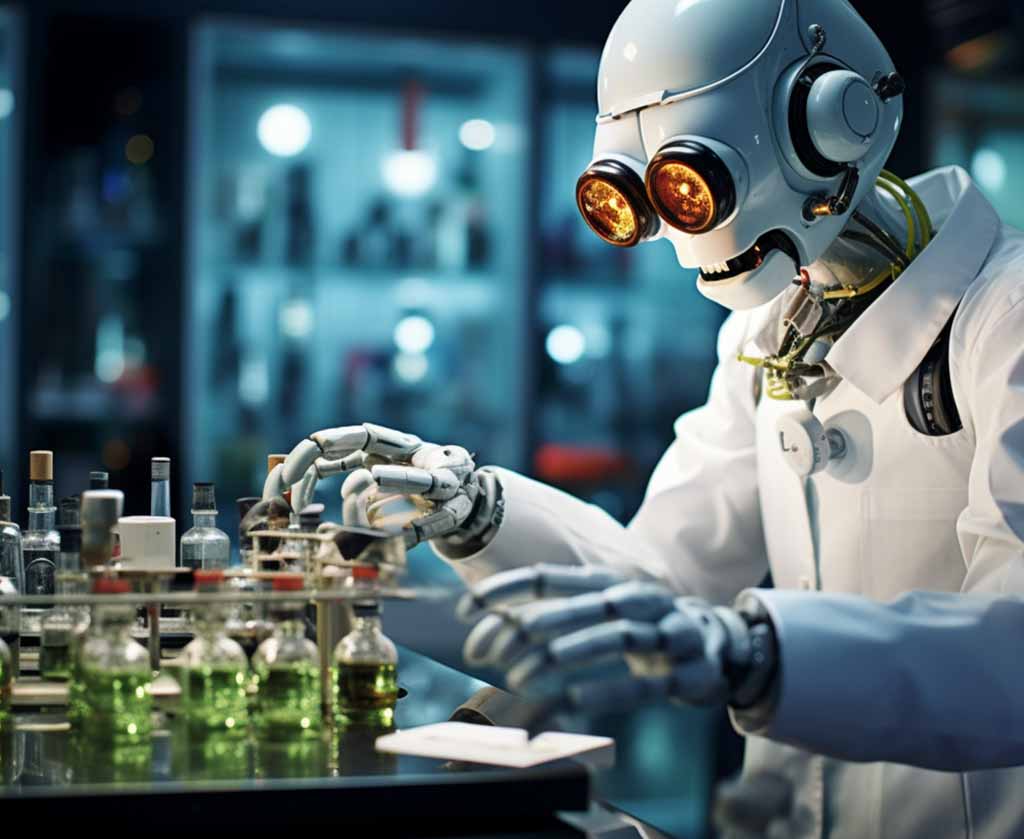
Fast forward to the present. After much speculation about how artificial intelligence would change our working lives, these scenarios have been put to the test over the past three years by the reality of ChatGPT and similar technologies. These models can now perform almost any task that can be easily parameterised far better than even the smartest and most experienced humans. In the age of AI, the question arises whether our unique selling point as chemists still holds any value. Chemical bonds and reactions can be parameterised exceptionally well.
When ATMs were introduced, it was surprising that more bankers were hired as a result: no longer as cashiers, but as advisors. We are now observing a similar revaluation of our human labour. “I save so much time with ChatGPT,” a doctor friend tells me. Drug interactions were a real time-waster for her, and AI can help with that. As in many other professions, doctors are also experiencing a shortage of skilled workers, meaning AI can free up time that can positively impact profitability and patient care.
The old adage holds that high-tech or high-touch professions are difficult to replace. Chemists remain valuable in the high-tech sector because chemistry is central to all scientific disciplines, helping build bridges and develop new ideas. Chemists whose work involves direct interaction with people, such as in sales or communication roles, are also difficult to replace.
So, when it comes to AI and the future of work, think in terms of possibilities rather than nightmare scenarios. Always seek out new, unique selling points rooted in human creativity and empathy.
This article was first published in Nachrichten aus der Chemie (issue 12-2025). See here the German original.
If you´re interested in career orientation and how the skills landscape changes with the advent of AI, you might want to take a look at our workshop PhD, and next? Career options, skills and orientation for scientists.